

When most people think of runway hazards, they imagine ice, snow, or standing water. But there’s another danger that builds up silently with every single landing: rubber.
Each time an aircraft touches down, its tires leave behind a thin layer of rubber on the runway surface. One landing does little harm. But after thousands of landings—especially in touchdown zones—those thin layers accumulate into a smooth, hard, and surprisingly slippery coating.
Runway rubber removal is not cosmetic. It is a critical safety operation that directly affects braking performance, hydroplaning risk, and regulatory compliance.
The Hidden Risk of Rubber Buildup
At first glance, a rubber-covered runway might not look dangerous. The dark, smooth surface can even appear well-worn in a harmless way. But the reality is far different.
How rubber buildup affects aircraft performance:
- Reduced friction coefficient – Rubber smooths out the pavement’s natural microtexture, eliminating the grip tires depend on.
- Increased stopping distance – Less friction means longer rollouts, especially dangerous on shorter runways or during rejected takeoffs.
- Higher hydroplaning risk – Water cannot penetrate a rubbered surface, so tires ride on top of the water instead of gripping the pavement.
- Uneven braking – Inconsistent rubber deposits can cause differential braking, pulling the aircraft off centerline.
The most dangerous scenario? A wet runway with heavy rubber buildup. Rain combines with the smooth rubber surface to create conditions nearly as slippery as ice. Pilots may apply brakes and get little to no response.
Real-World Consequences
Aviation authorities track runway excursions—incidents where aircraft leave the runway surface—as a major safety category. Rubber buildup is a documented contributing factor in many wet-runway excursions.
Consider this: An aircraft landing at 140 knots (approximately 160 mph) needs every foot of available runway and every bit of available friction. When rubber reduces the friction coefficient by 30–50%, the margin for error disappears.
This is not a theoretical risk. Airlines, regulators, and airport operators worldwide recognize rubber removal as a non-negotiable maintenance task.
Why Regular Rubber Removal Is Essential
Consistent, scheduled rubber removal delivers clear and measurable safety benefits.
1. Improved Braking Performance
Restoring the runway’s original friction texture allows aircraft to decelerate as designed. Anti-skid systems work properly, and pilots can rely on published stopping distances.
2. Enhanced Safety During Wet Conditions
A clean runway drains water effectively. Removing rubber restores the pavement’s ability to channel water away from tire contact points, dramatically reducing hydroplaning risk.
3. Compliance With Aviation Regulations
Both ICAO and FAA require runways to maintain minimum friction levels. Regular friction testing identifies when rubber removal is needed. Failure to comply can lead to operational restrictions, fines, or runway closure.
4. Extended Lifespan of Runway Surfaces
Rubber buildup traps moisture and debris against the pavement, accelerating surface degradation. Regular removal prevents this damage, delaying costly repaving or grooving repairs.
5. Consistent, Predictable Runway Performance
Airlines and pilots need confidence that runway conditions will be consistent from one landing to the next. A well-maintained rubber removal schedule provides that predictability.
How Runway Rubber Removal Is Done (The Right Way)
Not all rubber removal methods are equal. Older techniques like abrasive grinding or chemical treatments can damage pavement or harm the environment. Modern best practices have evolved significantly.
High-Pressure Water Blasting (The Gold Standard)
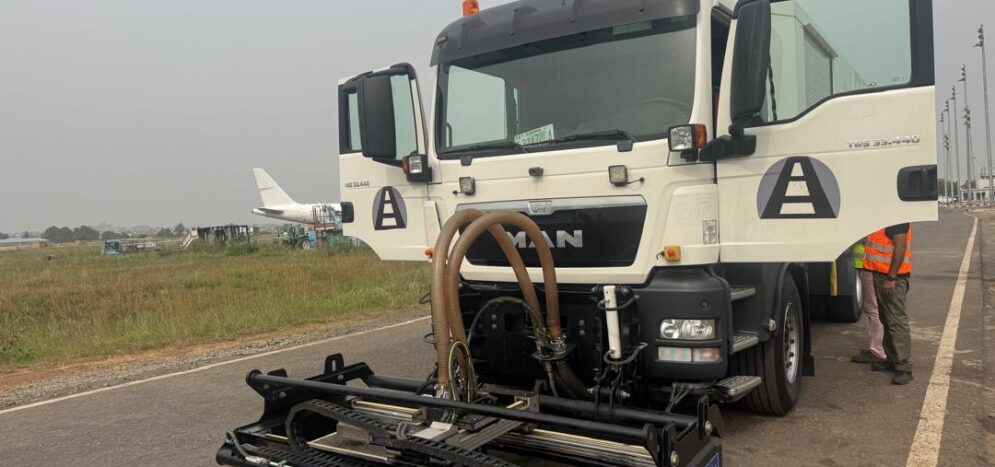
Today’s leading airfield maintenance companies use ultra-high-pressure water blasting systems. Here’s how they work:
- Water is pressurized to 20,000–40,000 PSI
- Specially designed rotating nozzles direct water at precise angles
- Water lifts and strips rubber without cutting into the pavement
- Rubber residue and water are vacuumed up immediately
- The runway is left clean, dry, and ready for use within hours
Advantages of water blasting:
- No pavement damage
- No chemicals or abrasive materials
- Environmentally friendly (water is filtered and reused)
- Restores both macrotexture and microtexture
- Safe for runway markings and grooving
Friction Testing Before and After
Responsible rubber removal programs always include friction testing:
- Before removal – Identifies low-friction areas and confirms need
- After removal – Verifies that friction has been restored to acceptable levels
Common friction testers include continuous friction measuring equipment (CFME) or decelerometers.
How Often Should Rubber Be Removed?
There is no universal schedule. Removal frequency depends on:
- Aircraft traffic volume – More landings = faster buildup
- Aircraft types – Heavy jets deposit rubber faster than light aircraft
- Runway usage patterns – Touchdown zones need more frequent attention
- Climate – Wet climates demand stricter friction standards
Typical guidelines:
- High-traffic commercial airports: Every 6–12 months
- Medium-traffic airports: Every 12–24 months
- Low-traffic or general aviation airports: Every 24–36 months
The best approach: Schedule removal based on friction test results, not calendar dates.
Conclusion: A Small Investment in Safety
Runway rubber removal is not glamorous. It’s expensive, requires specialized equipment, and shuts down runways during operations. But compared to the alternative—a runway excursion, an accident, or a regulatory violation—it is a small investment in safety.
Airports that prioritize regular rubber removal see:
- Fewer weather-related incidents
- Lower liability exposure
- Better inspection results
- Greater pilot confidence